This year, I took two semesters of music composition as part of my conservatory classes. Instrumental Music students are required to complete or show proficiency in three levels of music theory: fundamentals, 1, and 2, followed by a year of composition, and then recital prep. I enjoyed the class even though it was challenging for me because I learned about different styles that expanded my musical knowledge and significantly improved my music theory.
My work was heavily inspired and influenced by classical repertoire, which I know best as a violinist. After successfully completing my last project, which was songwriting for voice and piano, I began to reflect on my understanding of classical music overall. This led me to notice something uncomfortable: the absence of women.
I could name a few female composers. I had listened to works by Clara Schumann, like her Piano Trio in G Minor and Romances for violin and piano. I had also heard of Fanny Mendelssohn and Maria Anna Mozart. But beyond these names, my knowledge was limited. Even though I knew women historically had less opportunities to learn music, compose, and publish their work, I didn’t like that their presence was so minimal in what I studied and performed.
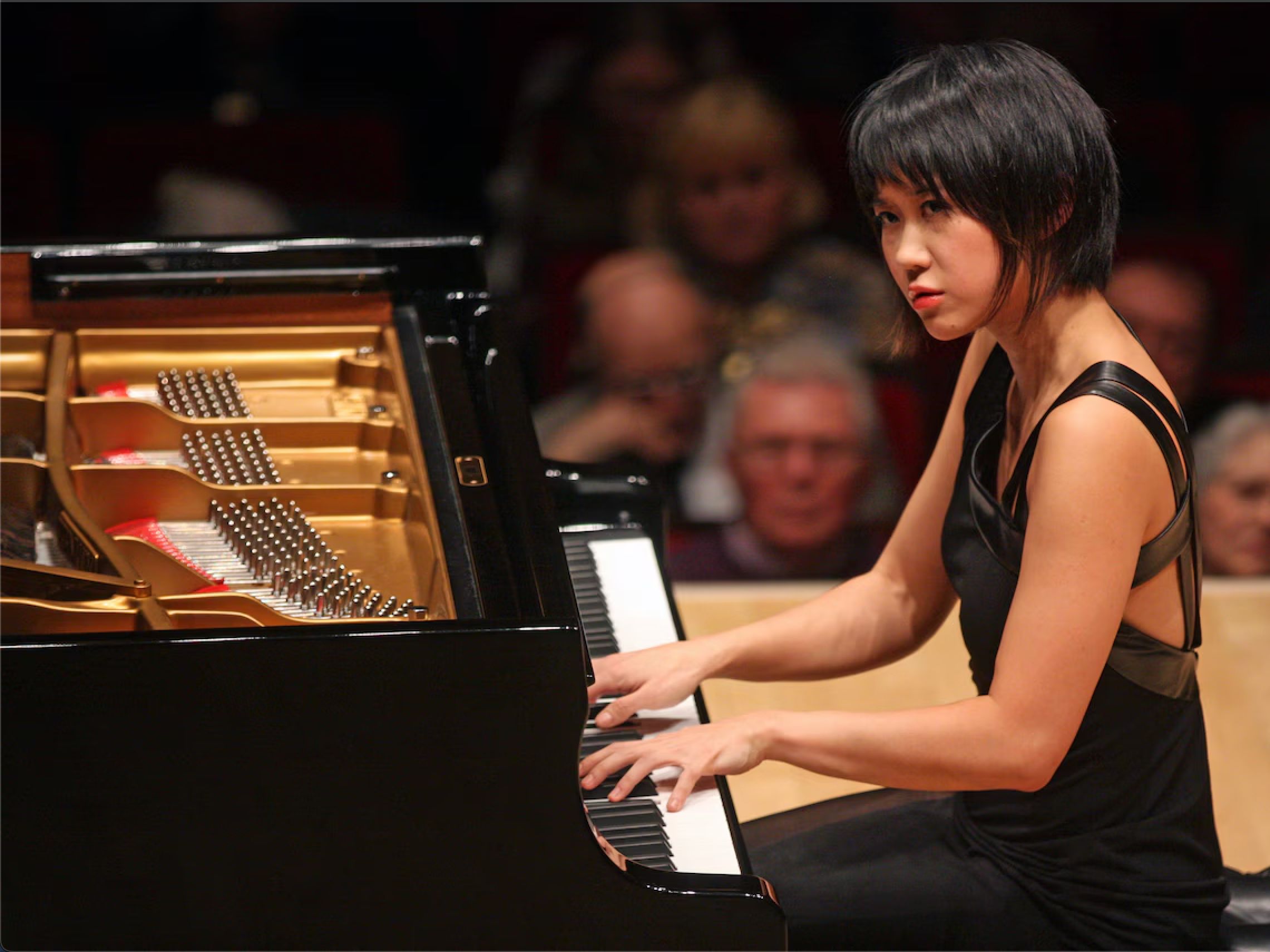
After some research, I discovered that this gap existed beyond composers—in conductors and performers too. According to an April 2025 article from The Observer, only 19% of solo or concerto recordings are made by women, despite women and men having equal music school enrollments. For example, of the 20 piano soloists who performed in 2024’s BBC Proms, only two were women: Isata Kanneh-Mason and Yuja Wang.
Furthermore, a 2000s study on orchestra auditions in the 20th century by Harvard’s Women and Public Policy program showed there was a significant gender gap in hiring. From the 1950s, a vast majority of symphony orchestras revised their hiring methods to holding blind auditions, where the auditionee would be veiled by a curtain of some sort to reduce bias against ethnicity or gender. This practice significantly increased their chances of being selected overall, but discrimination persisted.
Conductors still had ways to identify women—by the sound of their high heels clicking or the smell of their perfume. In other words, to be accepted into an ensemble, women often had to erase all traces of their identity. Additionally, final rounds were often not blind, meaning bias could find its way in later stages. In short: blind auditions improved outcomes and marked meaningful progress, but they did not eliminate inequity as the fight remains.
As a female violinist, this feels both discouraging and motivating. It is disheartening to recognize how many talented individuals have been excluded from such a beautiful art. At the same time, it pushes me to seek out underrepresented composers and performers and continue questioning traditions I accept without hesitation. The history of classical music is often presented as fixed, but it is actually still being written. Ultimately, expanding who we hear is just as much about correcting the past as it is about shaping the future.
 Survey Shows Students' Hopes for CSArts’ Future