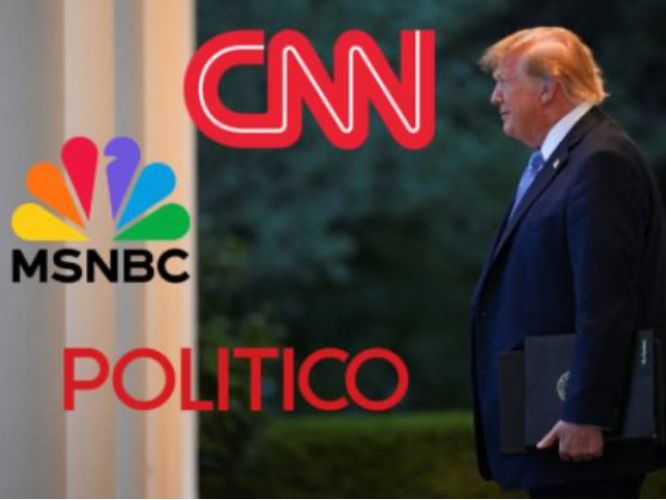
“We the people” are the three words that represent the heart of United States democracy, the Constitution as a whole is the basis for our government and how our country functions. Its amendments are what make it work so well. However, to this day, there is a struggle defining what these amendments mean and how to properly implement them. This issue broke to the surface on September 18th, 2026 when U.S. president Donald Trump barred CNN, MS NOW, and Politico from access to the James S. Brady Press Briefing Room, called the pool room due to its previous use.
Two days later, the three news outlets filed a joint lawsuit against the Trump Administration, saying “the Constitution does not allow a president or any other government official to deprive the press of their First Amendment rights and liberty and property interests with no notice or process based solely on his dislike of the content of their reporting.” The administration responded on X, saying, “White House access is a privilege — not a right.”
CNN, MS NOW, and Politico aren’t the only media outlets to disagree with this statement. Fox News, the Associated Press, the Washington Post and the New York Times also pulled out of the pool room. “No news organization — or person — should be retaliated against by the government over the words they use,” said an AP spokesperson, Patrick Maks. What Maks describes is “viewpoint discrimination,” and is a direct violation of the first amendment. But what is the first amendment, and does barring these news stations fall under viewpoint discrimination?
The First Amendment was ratified in 1791, created to protect freedom of religion, speech, press, peaceful assembly and a right to petition the government. Freedom of press is a well-worn debate. The relationship between the press and the government is set to be combative from the start, and the Trump presidency is no exception. Since his second inauguration, there have been 75 federal rulings that have found his administration violating the first amendment, though this counts infringing on freedom of speech, religion, assembly and petitioning the government, along with freedom of press.
This specific case led to a court ruling by Justice Tim Kelly, reversing the ban of CNN, MS NOW and Politico from the White House. The journalists are now back at work, but this ruling was only enforced for two weeks, leaving some to discuss the future. Representatives in Salt Lake City, Utah, created a panel to discuss protection of the first amendment. This included organizing for the midterms and the importance of protecting first amendment rights.
Father of journalism, Walter Cronkite is quoted as saying, “Freedom of the press is not just important to democracy, it is democracy.” The First amendment is a core part of our democracy, and just as in the past, it will continue to be debated. But, CSArts Journalism Instructor Robert Blair says there’s really no room for debate. “A Free Press is the 4th Estate of checks and balances. It is the ultimate check of the people on the Executive, Legislative, and Judicial branches of government. When that check is diminished, the First Ammendment and therefore, the peoples’ voices are not being represented.”
 Students Step Out for Palestine