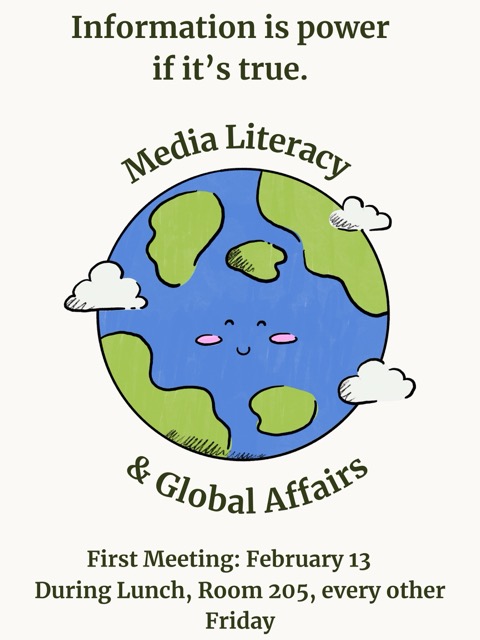
Has it happened to you, where you lay in bed, scrolling on social media, and you stumble upon information that makes you stop…and think…and the next day, you realize that it was all fake? All rumors? All A.I? Well, a club at CSArts can help change that!
The Media Literacy and Global Awareness Club was created by Kristina Ghazaryan, a sophomore in the IM Guitar Conservatory, with Creative Writing sophomore Olive Quinn Hierons and Visual Arts sophomore Joanna McGee. They started the club to teach members how to identify reliable sources and analyze media bias and tell the difference between the accurate and the inaccurate, and the biased from the unbiased.
“Our club aims to serve students interested in understanding global events and the role of the United States in these issues,” Ghazaryan said. While the club does focus on events in the United States, it also zooms out into various other global events related to other nations and their impacts.. Students can research current and past global issues, summarize them using verified sources to support their arguments, and provide others with general, accurate, and unbiased information. The club can help attendees build important life skills like critical analysis, expanding knowledge, research tips, and learning responsible civic awareness.
And who knew that this was caused by a casual social media doomscroll endeavor? With a fascination for functions of government and with a struggle to find reliable information, the club members decided to help attendees with finding accurate, unbiased information. It dawned on them that many people get their information from inaccurate places, one of them being social media. Social media in our current time can be filled with misinformation, especially from AI generated posts.
You may be asking why this is important in the first place. Why is it important to source out accurate information? “If people are always absorbing this misinformation, we are having this shield blocking us from moving forward and finding the real information,” Ghazaryan said. If the younger generations are absorbing inaccurate information, they will spread controversy, which can create social instability and help prevent violence and counter propaganda from influencing our beliefs.
As well as learning about global events, attendees can learn about media literacy, which is essential to navigating the complicated world of politics and media. Dr. Russell Ortega Milligan, a graduate communication instructor and academic partner at Southern New Hampshire University (SNHU), said, ““When we’re media literate, we can make informed decisions about products and services. Questioning information puts us in a better position to seek different perspectives, evaluate information, and understand our own thinking. Ultimately, we empower ourselves to become better problem-solvers instead of accepting information at face value.” Media literacy promotes critical analysis of media published and consumed daily.
The Media Literacy and Global Awareness Club is about helping students find accurate information from non-biased and reliable sources. Do you want to join? The club joins every other Friday during lunch in Room 205. The next meeting will be on February 27. Together, we can be part of the change.
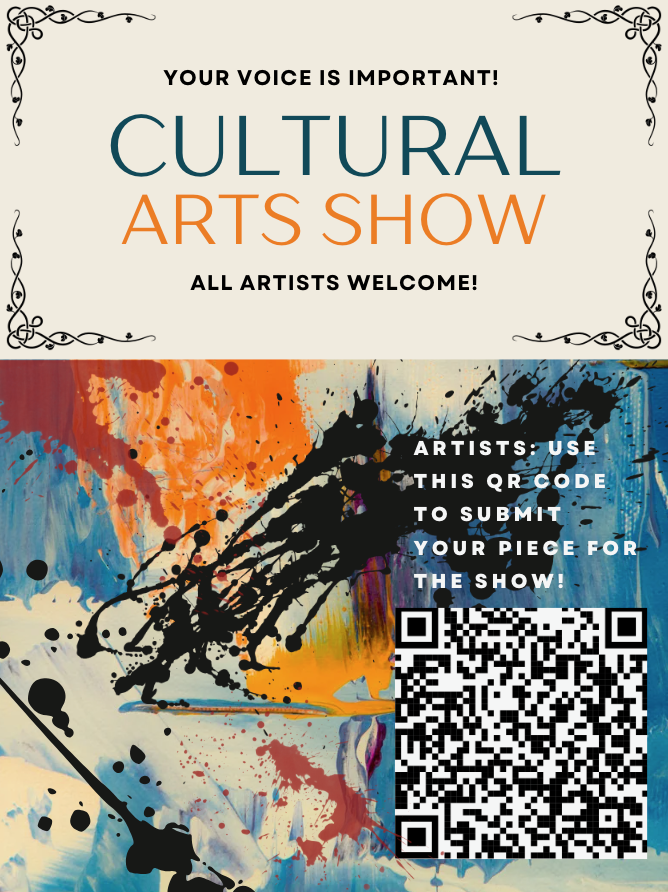 Cultural Arts Show